



The MSME Story at 80: Empowering Enterprise, Expanding Opportunity, Building the Nation
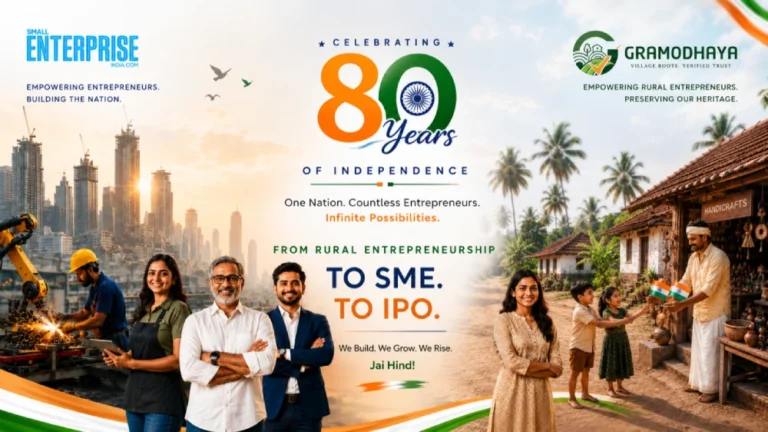
15 August 2026 : India’s 80th Independence Day
India’s 80th Independence Day is more than a celebration of freedom. It is an opportunity to reflect on how far the nation has travelled, and to ask what will take India from economic strength to truly inclusive prosperity.
One of the most remarkable stories of this transformation is the rise of India’s Micro, Small and Medium Enterprises (MSMEs).
Behind the highways, airports, digital payments, technology companies and modern cities is another India that is equally powerful: millions of entrepreneurs running factories, workshops, farms, food-processing units, trading businesses, service enterprises, handloom units, artisan clusters and family businesses.
They are the businesses that create livelihoods close to where people live. They convert local skills and resources into economic value. And increasingly, they are taking Indian products to national and global markets.
The MSME Engine Behind a Rising India
India’s MSME story has evolved dramatically over the past two decades. The Ministry of MSME describes the sector as a vibrant and dynamic part of the Indian economy, contributing around 30% of India’s GDP and more than 45% of exports. (MSME)
The scale of formalisation is even more striking. The Government’s MSME dashboard recorded 8.94 crore enterprises under Udyam and Udyam Assist registration as of 29 July 2026, with the associated registration data reporting nearly 39.6 crore employment opportunities. (MSME Dashboard)
These numbers tell us something profound.
India’s economic growth is no longer a story written only by large corporations. It is increasingly being written by millions of entrepreneurs.
The MSME sector is simultaneously an engine of employment, manufacturing, services, exports, innovation, rural development and social mobility.
The launch of the Udyam Registration Portal in 2020 was another important milestone. It created a simpler digital mechanism for formalising enterprises and brought manufacturing and service businesses under a unified classification framework. (MSME)
Government programmes have also increasingly focused on the issues that determine whether a small business survives or scales: access to finance, technology, skills, infrastructure, market access and formalisation. The RAMP programme, for example, was designed specifically to strengthen MSME capabilities, finance and market access. (MSME RAMP Portal)
The message is clear: supporting MSMEs is not merely welfare policy. It is economic strategy.
From “Small” to “Scalable”
Perhaps the most important change in India’s entrepreneurial landscape is a change in mindset.
A small enterprise is no longer expected to remain small.
A village food processor can become a regional brand. A handloom producer can reach customers across India. An artisan can sell directly to global consumers. A family manufacturing business can become an organised enterprise. A local entrepreneur can aspire to institutional capital and eventually the public markets.
Technology has dramatically reduced the distance between a village and a customer.
Digital payments, e-commerce, social media, cloud technology, artificial intelligence, logistics networks and digital financial services are creating possibilities that entrepreneurs of previous generations could scarcely imagine.
India’s next economic leap will therefore depend not only on creating more large companies, but on helping millions of small enterprises become stronger, more formal, more productive and more scalable.
Small Enterprise India: 17 Years of Building the Ecosystem
This is where Small Enterprise India has played a distinctive role.
For more than 17 years, Small Enterprise India has worked as an MSME knowledge and business-development platform, helping entrepreneurs understand the essentials of building and growing sustainable enterprises. Its ecosystem includes knowledge resources, the Small Enterprise magazine, conferences, webinars, masterclasses, Small Enterprise India portal, consulting and recognition programmes for entrepreneurs.
Its journey reflects an important truth: capital alone does not build great businesses. Knowledge, visibility, networks, mentorship, governance and market access matter just as much.
In 2026, Small Enterprise India has taken this mission a step further by placing the SME IPO journey firmly on the entrepreneurial agenda.
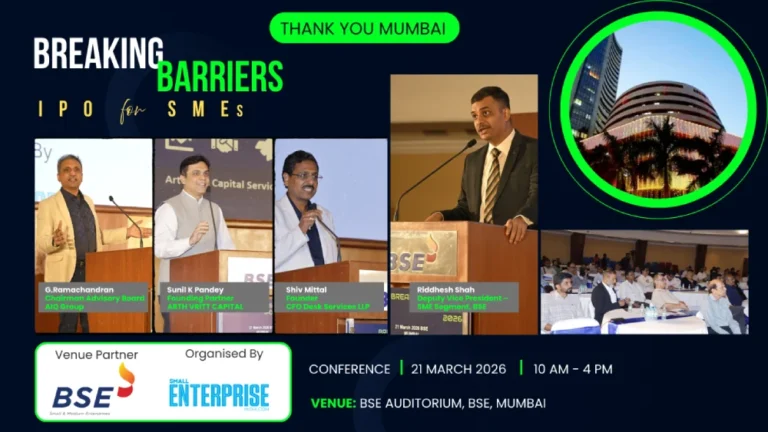
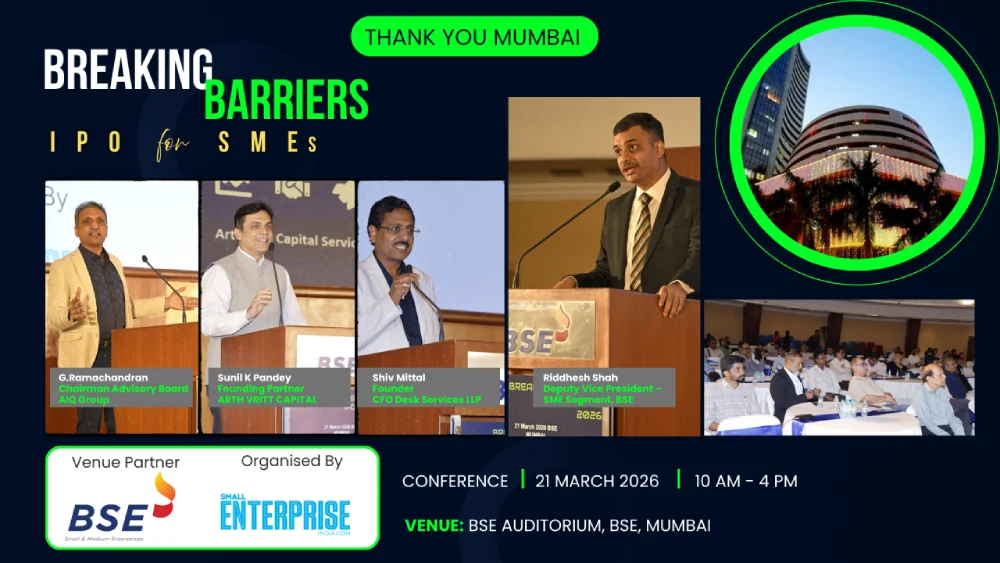
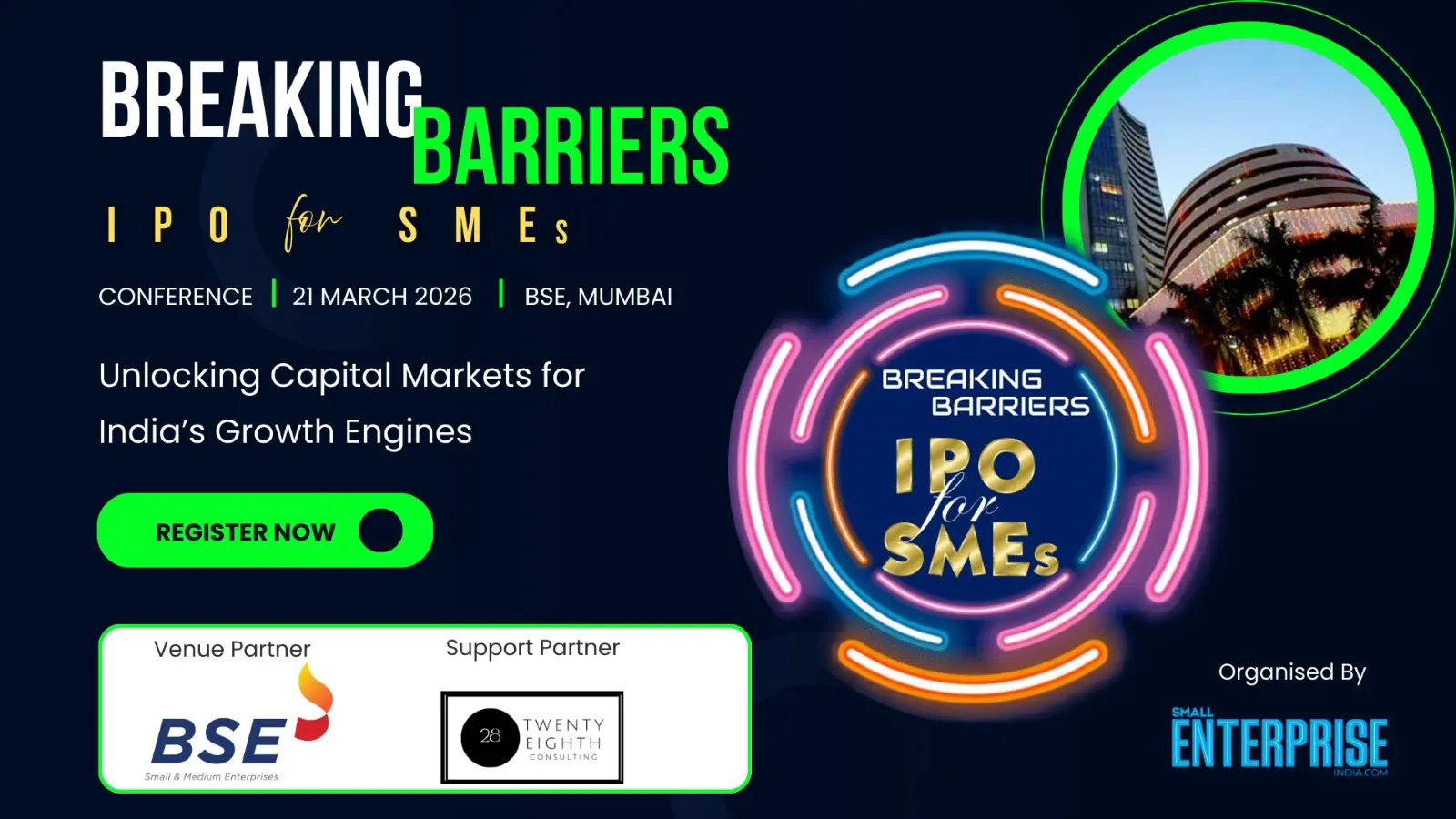
The SME IPO ecosystem represents a significant opportunity. India has millions of MSMEs, yet only a small fraction have reached the public markets. Small Enterprise India’s recent “Breaking Barriers – IPO for SMEs” initiative at the BSE brought together entrepreneurs, investors and capital-market experts to make the IPO journey more understandable and achievable for growth-ready SMEs.
The objective is not simply to help companies raise money.
It is to encourage entrepreneurs to build professionally managed, transparent, governed and scalable enterprises capable of creating long-term value.
Gramodhaya: Taking the MSME Revolution to Rural India
And now comes an important new chapter.

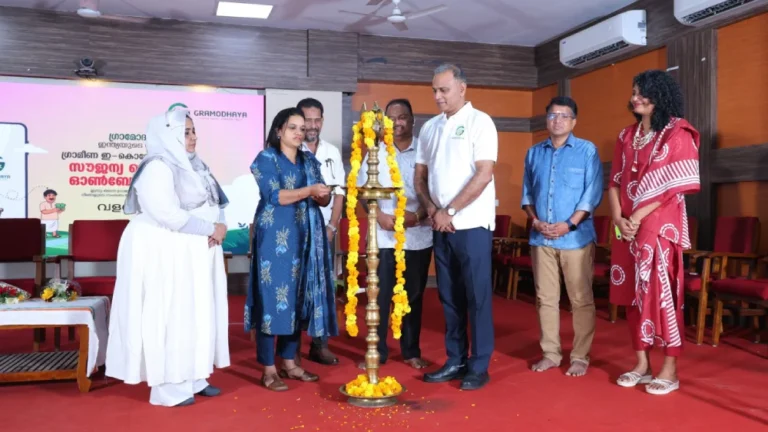
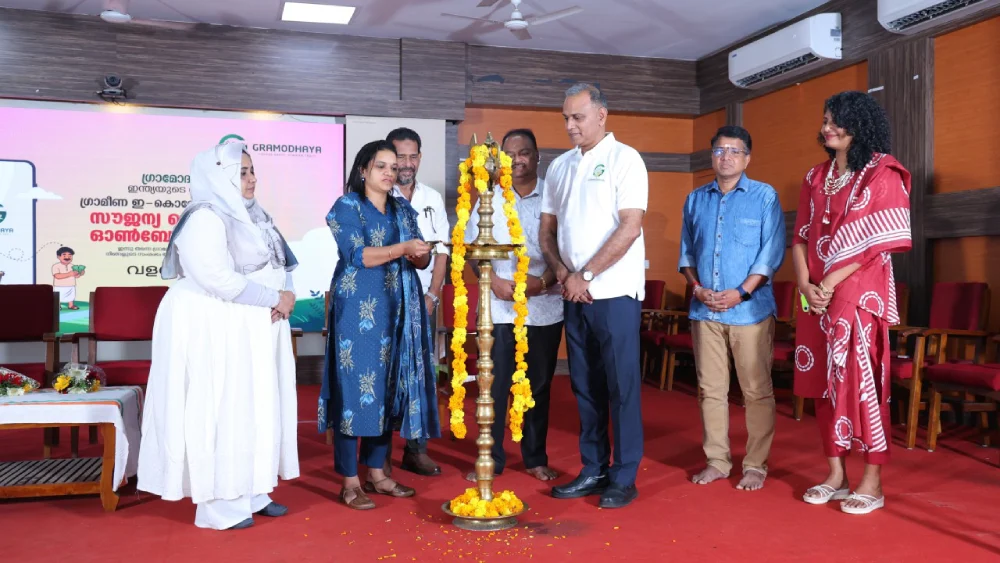
Gramodhaya, a sister concern of Small Enterprise India, is being launched with a focused mission: to bring India’s rural entrepreneurs into the digital economy.
Across India’s villages are thousands of products with enormous economic and cultural value—traditional foods, spices, agricultural products, handicrafts, handlooms, natural products, wellness products and locally manufactured goods.
The challenge has never been a lack of talent. The challenge has been access to markets, technology, visibility, trust, logistics and scale.
Gramodhaya seeks to bridge that gap by creating a digital marketplace connecting rural entrepreneurs with urban consumers and wider markets.
Its larger significance goes beyond e-commerce. It represents a bridge between India’s village economy and India’s modern economy.
And when Gramodhaya’s rural-market access ecosystem is combined with Small Enterprise India’s knowledge, business-growth and capital-market ecosystem, an extraordinary possibility emerges.
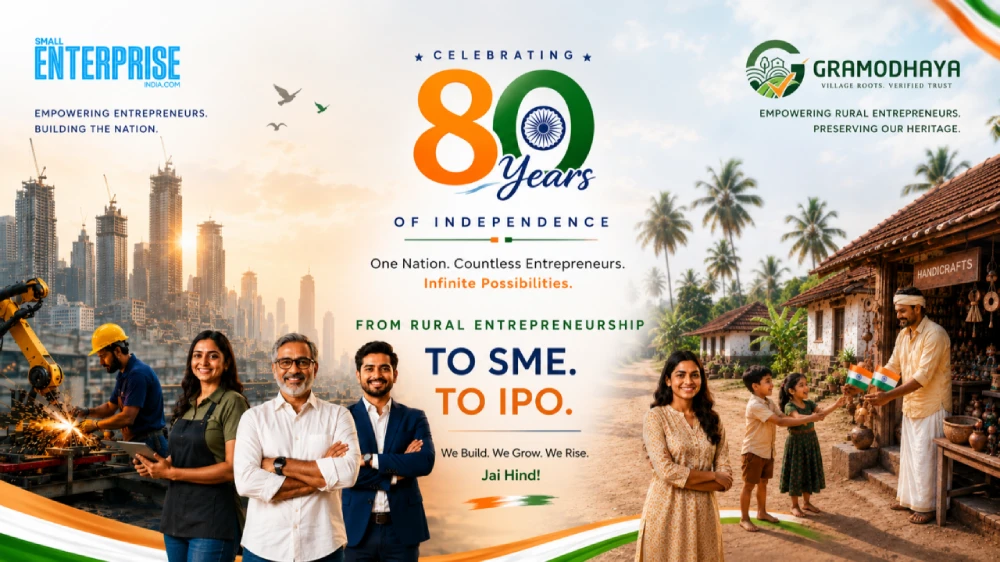
A rural entrepreneur could begin with a product made in a village, build a brand through digital commerce, strengthen the business through knowledge and professionalisation, expand nationally, attract investment and when the business becomes ready, begin the journey towards an SME IPO.
From village enterprise to national brand. From local livelihood to scalable business. From entrepreneur to wealth creator. From rural India to the capital markets.
That is a journey worth building.
The India We Must Build Next
As India celebrates 80 Years of Independence, our definition of economic freedom must evolve.
Freedom is not only political sovereignty. It is also the freedom of an entrepreneur to dream bigger. The freedom of a woman in a village to build her own enterprise. The freedom of an artisan to receive the true value of her craft. The freedom of a farmer-producer to access markets beyond the boundaries of her village. The freedom of a young person to create employment rather than wait for employment. And the freedom of a small business to grow into a great company.
India’s next chapter will be built not by a few, but by millions.
The future of India will be stronger when the smallest entrepreneur gets the opportunity to think big.
On this 80th Independence Day, let us therefore celebrate not only the India we have built, but the India we are yet to create, a nation where every village can produce entrepreneurs, every entrepreneur can access opportunity, and every promising enterprise can aspire to become a national and global success story.
India’s MSME story has evolved dramatically over the past two decades. The Ministry of MSME describes the sector as a vibrant and dynamic part of the Indian economy, contributing around 30% of India’s GDP and more than 45% of exports. (MSME)
The scale of formalisation is even more striking. The Government’s MSME dashboard recorded 8.94 crore enterprises under Udyam and Udyam Assist registration as of 29 July 2026, with the associated registration data reporting nearly 39.6 crore employment opportunities. (MSME Dashboard)
These numbers tell us something profound.
India’s economic growth is no longer a story written only by large corporations. It is increasingly being written by millions of entrepreneurs.
The MSME sector is simultaneously an engine of employment, manufacturing, services, exports, innovation, rural development and social mobility.
The launch of the Udyam Registration Portal in 2020 was another important milestone. It created a simpler digital mechanism for formalising enterprises and brought manufacturing and service businesses under a unified classification framework. (MSME)
Government programmes have also increasingly focused on the issues that determine whether a small business survives or scales: access to finance, technology, skills, infrastructure, market access and formalisation. The RAMP programme, for example, was designed specifically to strengthen MSME capabilities, finance and market access. (MSME RAMP Portal)
The message is clear: supporting MSMEs is not merely welfare policy. It is economic strategy.
From “Small” to “Scalable”
Perhaps the most important change in India’s entrepreneurial landscape is a change in mindset.
A small enterprise is no longer expected to remain small.
A village food processor can become a regional brand. A handloom producer can reach customers across India. An artisan can sell directly to global consumers. A family manufacturing business can become an organised enterprise. A local entrepreneur can aspire to institutional capital and eventually the public markets.
Technology has dramatically reduced the distance between a village and a customer.
Digital payments, e-commerce, social media, cloud technology, artificial intelligence, logistics networks and digital financial services are creating possibilities that entrepreneurs of previous generations could scarcely imagine.
India’s next economic leap will therefore depend not only on creating more large companies, but on helping millions of small enterprises become stronger, more formal, more productive and more scalable.
Small Enterprise India: 17 Years of Building the Ecosystem
This is where Small Enterprise India has played a distinctive role.
For more than 17 years, Small Enterprise India has worked as an MSME knowledge and business-development platform, helping entrepreneurs understand the essentials of building and growing sustainable enterprises. Its ecosystem includes knowledge resources, the Small Enterprise magazine, conferences, webinars, masterclasses, Small Enterprise India portal, consulting and recognition programmes for entrepreneurs.
Its journey reflects an important truth: capital alone does not build great businesses. Knowledge, visibility, networks, mentorship, governance and market access matter just as much.
In 2026, Small Enterprise India has taken this mission a step further by placing the SME IPO journey firmly on the entrepreneurial agenda.
The SME IPO ecosystem represents a significant opportunity. India has millions of MSMEs, yet only a small fraction have reached the public markets. Small Enterprise India’s recent “Breaking Barriers – IPO for SMEs” initiative at the BSE brought together entrepreneurs, investors and capital-market experts to make the IPO journey more understandable and achievable for growth-ready SMEs.
The objective is not simply to help companies raise money.
It is to encourage entrepreneurs to build professionally managed, transparent, governed and scalable enterprises capable of creating long-term value.
Gramodhaya: Taking the MSME Revolution to Rural India
And now comes an important new chapter.
Gramodhaya, a sister concern of Small Enterprise India, is being launched with a focused mission: to bring India’s rural entrepreneurs into the digital economy.
Across India’s villages are thousands of products with enormous economic and cultural value—traditional foods, spices, agricultural products, handicrafts, handlooms, natural products, wellness products and locally manufactured goods.
The challenge has never been a lack of talent. The challenge has been access to markets, technology, visibility, trust, logistics and scale.
Gramodhaya seeks to bridge that gap by creating a digital marketplace connecting rural entrepreneurs with urban consumers and wider markets.
Its larger significance goes beyond e-commerce. It represents a bridge between India’s village economy and India’s modern economy.
And when Gramodhaya’s rural-market access ecosystem is combined with Small Enterprise India’s knowledge, business-growth and capital-market ecosystem, an extraordinary possibility emerges.
A rural entrepreneur could begin with a product made in a village, build a brand through digital commerce, strengthen the business through knowledge and professionalisation, expand nationally, attract investment and when the business becomes ready, begin the journey towards an SME IPO.
From village enterprise to national brand. From local livelihood to scalable business. From entrepreneur to wealth creator. From rural India to the capital markets.
That is a journey worth building.
The India We Must Build Next
As India celebrates 80 Years of Independence, our definition of economic freedom must evolve.
Freedom is not only political sovereignty. It is also the freedom of an entrepreneur to dream bigger. The freedom of a woman in a village to build her own enterprise. The freedom of an artisan to receive the true value of her craft. The freedom of a farmer-producer to access markets beyond the boundaries of her village. The freedom of a young person to create employment rather than wait for employment. And the freedom of a small business to grow into a great company.
India’s next chapter will be built not by a few, but by millions.
The future of India will be stronger when the smallest entrepreneur gets the opportunity to think big.
On this 80th Independence Day, let us therefore celebrate not only the India we have built, but the India we are yet to create, a nation where every village can produce entrepreneurs, every entrepreneur can access opportunity, and every promising enterprise can aspire to become a national and global success story.
Small businesses. Big dreams. Stronger India.
Jai Hind!